
The US-Iran War So Far
The United States’ air and missile campaign against Iran has entered a dangerous but increasingly defined phase, as Washington presses ahead with strikes while allies such as the United Kingdom attempt to balance support for US objectives with fears of a wider regional war.
At the heart of the crisis is a sustained US‑led operation, coordinated closely with Israel, targeting Iran’s military and nuclear‑related infrastructure. The opening salvo, a wave of hundreds of strikes across multiple Iranian cities and bases, signalled a sharp escalation in an already volatile relationship. The White House has framed the campaign as a necessary move to degrade Iran’s nuclear and missile capabilities and to respond to Tehran‑backed attacks across the region, rejecting accusations that it amounts to an unprovoked act of aggression.
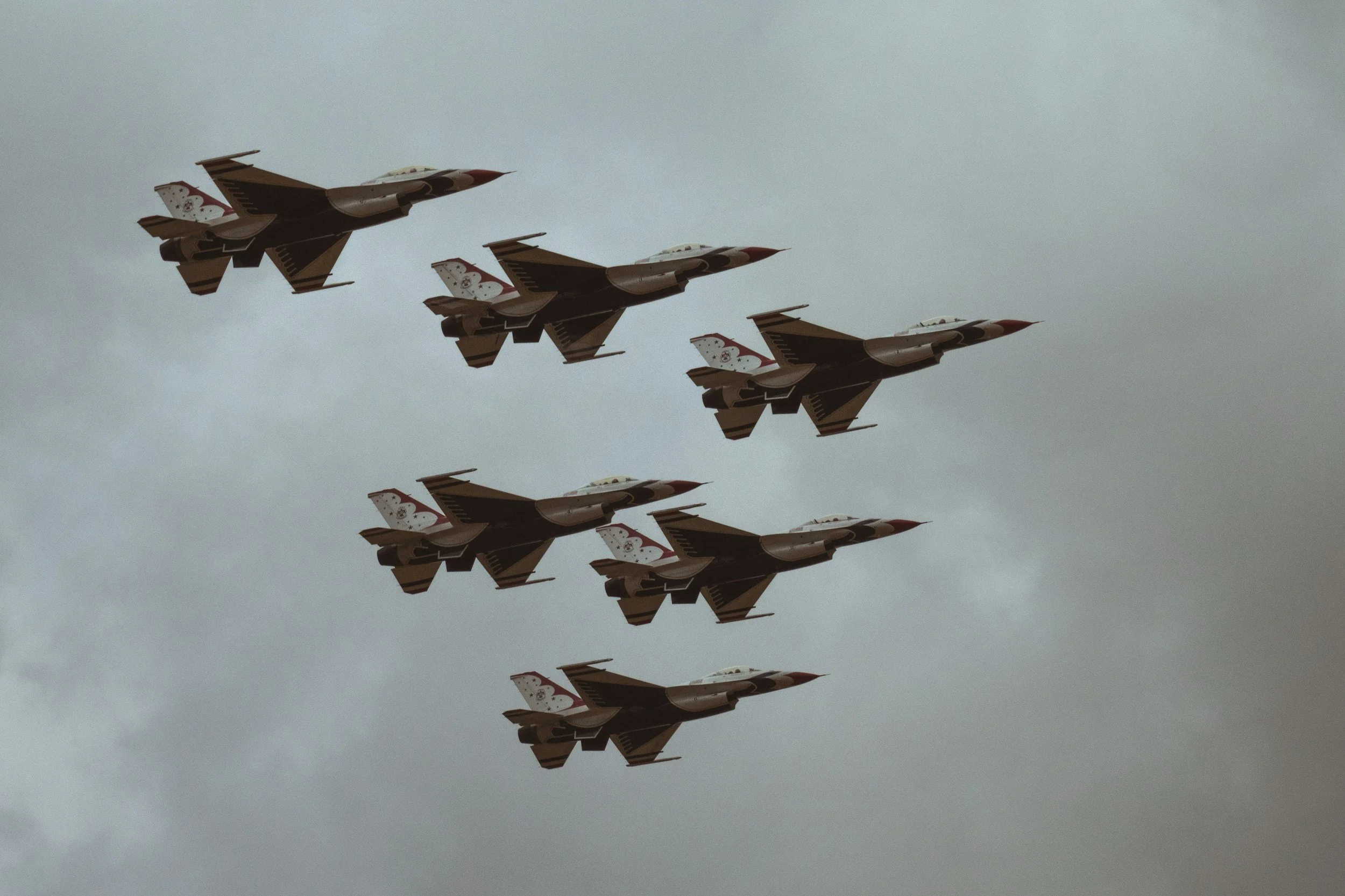
In the weeks since, US forces have continued to hit air defence systems, missile launchers and Revolutionary Guard installations, seeking to limit Iran’s capacity to retaliate or threaten shipping lanes. Targets linked to energy and export infrastructure have been among the most sensitive. Strikes near key oil and gas facilities, and intensified US warnings over the Strait of Hormuz, have fed a sharp rise in global energy prices and raised the spectre of a broader economic shock.
For President Donald Trump, the campaign is being sold domestically as a demonstration of American resolve and a recalibration of the balance of power in the Middle East. It is also intended to send a message to Iran’s leadership that further attacks on US assets or allies will carry immediate and heavy costs. But the operation stops, at least for now, short of a ground invasion, reflecting a political calculation in Washington that voters will accept high‑intensity air power far more readily than another large‑scale Middle East war involving US troops.
The UK government has emerged as one of Washington’s most important, but also most cautious, partners. Prime Minister Keir Starmer has repeatedly endorsed the goal of preventing Iran from acquiring a nuclear weapon and has condemned Iranian‑backed attacks in the region. Yet he has also drawn a clear line between political and logistical support for the United States and direct British participation in offensive operations.
London declined to join the initial US‑Israeli strike package, a decision that officials link to the legacy of the Iraq War and the need to demonstrate that any UK involvement rests on a narrow legal and strategic rationale. Instead, ministers stress that Britain’s role is focused on collective self‑defence and the protection of its own nationals and bases, rather than regime change or open‑ended military engagement.
Even within those constraints, the UK has taken steps that underscore the depth of its alignment with Washington. It has authorised the use of British bases by US forces for what Downing Street describes as “specific and limited defensive actions” against Iranian capabilities. Protection levels at UK facilities have been raised to the highest tier, and contingency plans have been activated to move or evacuate British nationals from parts of the wider region deemed most at risk.
Iran has reacted sharply to these decisions. Officials in Tehran have warned that permitting US operations from British soil or bases amounts to participation in aggression and could place the UK in Iran’s line of fire. Missile launches towards the joint UK‑US base at Diego Garcia have highlighted how rapidly the conflict could spill over onto British military assets, even if London maintains its current, more constrained posture.
Across Europe, the pattern is one of guarded backing for the United States combined with growing anxiety about escalation. France, Germany and other EU partners have broadly endorsed efforts to curb Iran’s nuclear and ballistic programmes, but their leaders have coupled that support with urgent calls for restraint and a return to diplomacy. Statements from European capitals have stressed that Iran must never obtain a nuclear weapon, while also warning that further attacks on energy infrastructure or shipping could tip the global economy into a new period of volatility.
NATO’s leadership has echoed that line, describing the US strikes as a response to a shared security threat while stopping short of characterising the conflict as a NATO operation. Other close US partners, including Canada and Australia, have issued robust statements backing Washington’s objectives and criticising Iran’s regional activities, though they too show little appetite for direct, large‑scale military involvement.
Outside the Western bloc, the reaction has been markedly different. Russia has condemned the campaign as a premeditated act of aggression against a sovereign state and used the crisis to accuse Washington and its allies of double standards over international law. China has warned that continued escalation threatens not only regional stability but also vital energy supplies on which Asian economies depend. Both powers have called for urgent de‑escalation, even as they deepen their own ties with Tehran and present the conflict as evidence of the need for a more multipolar global order.
In much of the Global South, governments have responded with a mix of concern and calculation. Some, wary of Iran’s regional role or quietly aligned with US security policy, have offered muted support for efforts to curb Tehran’s power. Others have focused on the humanitarian risks and the precedent set by a major US‑led assault on another Middle Eastern state. For many, the most immediate worry is economic: higher fuel and food prices, new shipping risks, and the possibility that prolonged instability in and around the Strait of Hormuz could choke off critical trade routes.
Taken together, the pattern of international responses highlights the central dilemma of the current phase of the Iran crisis. The United States has chosen to exercise overwhelming military power in an effort to reshape Iran’s capabilities and behaviour, betting that decisive action now will prevent a more dangerous confrontation later. Allies such as the UK are trying to support that strategy without being drawn into a full‑scale war, while adversaries and non‑aligned states warn that the use of force on this scale risks creating precisely the instability it is meant to avert.