
Abraham Lincoln - Part Two
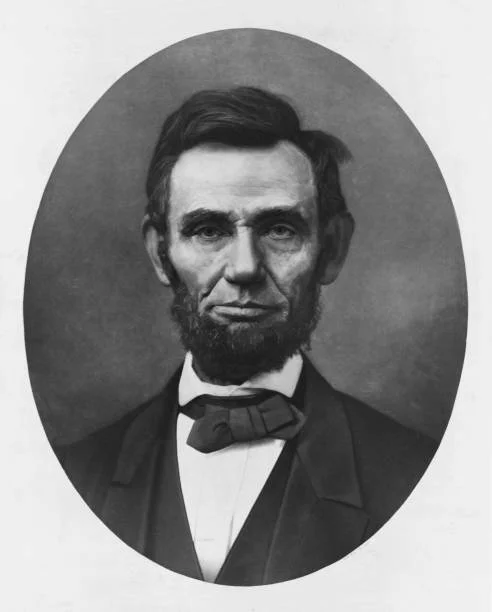
Abraham Lincoln: Presidency, Assassination, and Aftermath
Abraham Lincoln entered the presidency in March 1861 carrying the weight of a nation that was already beginning to tear itself apart. His election, which had been the triumphant culmination of his long rise, triggered political shockwaves. Several Southern states viewed his victory not simply as a political event but as an existential threat to their way of life. Even before he took the oath of office, states began announcing their secession, forming a separate government, and seizing federal forts and arsenals. Lincoln, who had spent decades building a reputation for moderation and reason, suddenly faced a crisis of such magnitude that no American president before him had confronted anything like it.
His journey from Springfield to Washington underscored the tension of the moment. Crowds turned out to greet him town after town, hoping to see the tall, familiar figure whose reputation for honesty and humanity contrasted sharply with the fear swirling through newspapers. Yet the journey was overshadowed by reminders of danger. There were whispers of assassination plots, warnings from detectives, and enough credible reports that his advisors insisted on adjusting his route. For a man who had always been accessible to neighbours, constituents, and passers-by, the notion of travelling under secrecy struck him as distasteful. Still, he agreed, arriving in Washington quietly in the early hours of morning.
When he finally stepped onto the platform on March 4, 1861, to deliver his first inaugural address, he spoke carefully, trying to calm the storm. He affirmed that he had no intention of interfering with slavery where it already existed. He reminded the nation that the Union was older than the Constitution itself. He appealed to emotion, urging Americans to recall their shared history and their “mystic chords of memory.” His intention was not to threaten, but to bind wounds before they opened further. Despite the eloquence of his words, the divisions were too deep. Within weeks, the conflict he hoped to avoid ignited into open war.
The war that followed demanded everything Lincoln had ever learned about patience, leadership, persuasion, and moral clarity. The early months were marked by uncertainty. He struggled to find military commanders with the boldness and skill the moment required. The Union armies suffered defeats that shook public confidence. Newspapers criticised him relentlessly. Political allies wavered. The task of leading a sprawling, fractious democracy while waging war tested every fibre of his character.
Yet Lincoln approached the presidency with the same methodical resilience he had once brought to law, self-education, and public debate. He spent long nights reading reports, studying maps, and poring over letters from generals. He visited troops, walked the halls of hospitals, and listened to ordinary soldiers. He wrote with warmth and reason to families who had lost sons. He handled cabinet members who were ambitious, argumentative, and occasionally insubordinate. With a lawyer’s precision and a storyteller’s human touch, he balanced personalities and policies in a political environment that often seemed impossible.
One of his defining qualities as president was his capacity to hold firm moral convictions while still embracing patience and timing. He abhorred slavery, yet understood that the nation required steady movement rather than rash declarations. As the war progressed and its human cost mounted, he began to shape a path toward making the conflict explicitly a struggle for the future of freedom. His Emancipation Proclamation, which he issued after careful legal and military deliberation, redefined the purpose of the war, transforming it into a fight for a new American reality.
Public sentiment swung wildly throughout his presidency. Some criticised him for moving too slowly on slavery. Others accused him of going too far. Some condemned the suspension of habeas corpus, while others saw it as necessary to preserve the nation. Lincoln bore every criticism with a mix of humour, patience, and occasional exhaustion. He remained guided by the conviction that the Union must endure, because only within that Union could the principles of liberty and equality be secured for future generations.
Yet even under unimaginable pressure, he retained an ability to connect with people. He visited soldiers and shook hands until his arm ached. He read poetry to steady himself. He spent evenings telling stories, often humorous, to cut through tension in cabinet meetings. His wit never deserted him, nor did his melancholy. He felt the suffering of the war deeply. The death of his young son Willie in 1862 struck him with a grief that lingered throughout the rest of his presidency, yet he continued working through the sorrow, driven by a sense of duty rooted in his earliest years of hardship and resilience.
As the war dragged on, the nation looked toward the 1864 presidential election with uncertainty. Many doubted Lincoln would be re-elected. Military stalemates eroded public confidence. Political opposition gathered strength. But by late 1864, Union victories began to shift sentiment. Lincoln won re-election, a testament not only to military progress but also to the public’s recognition of his steady leadership amid catastrophe.
During this period, Lincoln’s vision for the post-war nation began to come into focus. He spoke of reconciliation rather than revenge, of “binding up the nation’s wounds” and welcoming Southern states back into the Union “with malice toward none, with charity for all.” His approach reflected both pragmatism and deep human instinct. He understood that healing would require generosity, fairness, and a willingness to see former enemies as partners in rebuilding. Behind the public rhetoric was a private man who hoped desperately that the nation could emerge from its torment with a renewed sense of unity.
By early 1865, the war neared its end. Lincoln watched as events accelerated toward conclusion. He visited Richmond shortly after its fall, walking the streets with a humility that startled even his supporters. Formerly enslaved people knelt before him; he gently told them not to kneel to any man. This small moment captured his essence: humble, moral, and grounded in a belief that human dignity was not a rhetorical idea but a lived principle.
The war finally drew to a close in April 1865. Lincoln’s relief was immense. The burden he had carried for four years began to lift. He allowed himself to speak openly of hope—that the nation could heal, that the future might be brighter, that the sacrifices had meaning. Washington, too, felt lighter. After years of tension, laughter returned, music played, and people began to imagine peace.
It was in this fragile moment of calm that tragedy struck.
On the evening of April 14, 1865, Lincoln attended a play at Ford’s Theatre with his wife, Mary. He had resisted going out in public while the war raged, but with hostilities essentially over, he accepted the invitation as a small step toward normalcy. The relaxation and warmth of that night stand in stark, heartbreaking contrast to what followed. John Wilkes Booth, an actor and Confederate sympathiser, entered the presidential box during the performance and shot Lincoln at close range.
Lincoln never regained consciousness. He was carried across the street to a modest boarding house, where doctors worked through the night to keep him alive. Cabinet members and close friends kept vigil. Mary Lincoln wept inconsolably. As dawn broke on April 15, Abraham Lincoln died.
His death sent shockwaves through the nation. Bells tolled, trains draped in black crept across the countryside, and crowds gathered in silence as his funeral procession passed. A country that had seen years of destruction found itself grieving the loss of the man who had guided it through its darkest trial. For many, Lincoln became more than a leader; he became a symbol of endurance, sacrifice, and the moral possibilities of the American experiment.
The aftermath of his assassination reshaped how Americans understood his life and presidency. In death, his image took on a mythic quality. Portraits of Lincoln appeared in homes across the country. Eulogies painted him as both martyr and father figure. Even those who had once criticised him found themselves acknowledging his honesty, his clarity of purpose, and his unwavering commitment to preserving the Union.
His legacy quickly crystallised around a few central ideas: that the United States was a single, indivisible nation; that democracy required both firmness and compassion; and that moral progress, even when painfully slow, was worth pursuing. He became a touchstone for debates about equality, justice, and the responsibilities of leadership. At the same time, people who had known him personally remembered not the icon but the man: the storyteller, the lawyer with a gentle voice, the father who mourned deeply, and the leader who shouldered a burden beyond measure.
After his body was returned to Springfield, the city where he had built his adult life, he was laid to rest among the people who had once known him not as a legend but as a neighbour. There, his grave became a site of pilgrimage. Generations visited, bringing new questions about the nation’s direction, searching for guidance in the memory of someone who had navigated the country through turmoil with reason, humility, and steadfast moral conviction.
The story of Abraham Lincoln’s presidency, assassination, and the aftermath of his death forms a second arc in the larger narrative of his life. If the first arc celebrates the rise of a man shaped by frontier hardships and personal determination, the second records how he bore the crushing responsibilities of leadership during the greatest crisis the nation had faced. His untimely death froze his legacy in a moment of grief, but his ideas continued to echo through American history.
Lincoln’s journey—from log cabin to the presidency, from a young lawyer reading by candlelight to a leader confronting a nation’s collapse—remains one of the most profound human stories of endurance, vision, and sacrifice. His life before the presidency shaped his values; his years in the White House tested them; his death solidified them in the public memory. More than a century later, his words, decisions, and humanity remain central to the ongoing American story.